
Financial Services: Your Emissions Live on Someone Else's Balance Sheet
Financed emissions were over 700x direct emissions in a CDP analysis. Learn how PCAF and Scope 3 Category 15 help financial institutions measure portfolio emissions.
 PS Team10 min read
For financial institutions, the biggest emissions number often sits outside their own operations. It sits in the companies, projects and activities they finance.
CDP found that financed emissions were, on average, more than 700 times larger than direct operational emissions among the financial institutions that reported portfolio emissions in its analysis.
That changes the way financial institutions need to think about carbon accounting.
A bank might have efficient offices, renewable electricity and a low-carbon fleet. Its direct operational emissions could still represent a small share of the emissions associated with its broader financial activities.
So the question is no longer only:
How much do our own operations emit?
It is also:
What emissions are associated with the capital we provide?
That's the idea behind financed emissions.
What are financed emissions?
Financed emissions are the greenhouse gas emissions associated with the lending and investment activities of a financial institution.
Under the GHG Protocol, these emissions are addressed under Scope 3 Category 15, Investments. Category 15 covers Scope 3 emissions associated with a company's investments that are not already included in Scope 1 or Scope 2. It is designed primarily for financial institutions and investors.
For a bank or investor, this could include emissions associated with:
- Business loans
- Project finance
- Equity investments
- Corporate bonds
- Mortgages
- Commercial real estate
- Motor vehicle loans
- Other financial activities covered by the applicable methodology
The key point is simple.
A financial institution does not need to operate an asset to have emissions associated with financing that asset.
A bank might finance a steel plant without having any operational control over the plant.
The plant's emissions are still relevant to the bank's financed emissions inventory because the bank's capital is connected to that economic activity.
Why financed emissions matter
A financial institution's direct emissions tell only part of the story.
Consider the two categories side by side.
Operational emissions
These come from activities such as:
- Office electricity
- Fuel consumption
- Company vehicles
- Business travel
- Refrigerants
- Other operational sources
Financed emissions
These are associated with economic activities supported through:
- Lending
- Investments
- Project finance
- Other relevant financial activities
For financial institutions, financed emissions often represent a much larger climate impact than their direct operations. CDP's analysis of institutions reporting portfolio emissions found the average financed emissions figure was more than 700 times their direct emissions. CDP
This is why measuring only office electricity, fuel and business travel gives an incomplete picture of a financial institution's climate impact.
The GHG Protocol provides the accounting structure through Scope 3 Category 15.
The next challenge is measurement.
That's where PCAF comes in.
PCAF: A common methodology for financial institutions
PCAF, the Partnership for Carbon Accounting Financials, developed the Global GHG Accounting and Reporting Standard for the Financial Industry to provide a common approach for measuring and reporting emissions associated with financial activities. The standard was developed specifically for financial institutions and its original financed emissions methodology was reviewed by the GHG Protocol for conformance with Scope 3 Category 15. GHG Protocol
PCAF's current Part A, Financed Emissions, Third Edition was released in 2025. The updated standard expands the methodologies available to financial institutions across different financial activities and asset classes. Carbon Accounting Financials
This asset-class approach matters.
A mortgage is not measured in the same way as project finance.
Listed equity is not measured in the same way as a business loan.
The methodology needs to reflect the underlying financial activity.
How does the calculation work?
At a high level, the principle is straightforward.
A financial institution attributes a share of a company's or project's emissions to its own financing or investment.
Financed emissions = Attribution factor × Company or project emissions
The exact attribution approach depends on the asset class and the applicable PCAF methodology.
For illustration, suppose a bank finances a company that reports:
1,000,000 tCO₂e
If the applicable attribution factor is:
5%
The attributed emissions would be:
1,000,000 × 5% = 50,000 tCO₂e
The arithmetic is rarely the hardest part.
Getting the right data behind the calculation is.
The real challenge is data
A financial institution calculating financed emissions needs information from several parts of the organisation.
Portfolio data
Which companies and projects are being financed?
Financial data
What is the institution's exposure?
Emissions data
What are the borrower's or investee's relevant emissions?
Methodology
Which PCAF methodology applies?
Data quality
How reliable is the underlying information?
Evidence
Where did each input come from?
Put these together and you get a data trail:
Portfolio → Counterparty → Financial exposure → Emissions data → Attribution → Calculation → Review → Disclosure
The value of this approach is that it works in both directions.
A reviewer should be able to start with the final disclosed number and work backwards to the underlying evidence.
If one link in that chain is weak, the final number becomes harder to defend.
The problem is then not only the calculation.
It is the data governance behind it.
What if the borrower has no emissions data?
This is one of the biggest practical challenges.
Many companies, especially smaller businesses, do not have complete Scope 1, Scope 2 or Scope 3 inventories.
That does not mean the calculation has to stop.
PCAF provides approaches for working with different levels of data availability. Its methodology also uses a data quality score from 1 to 5, where 1 represents the highest data quality and 5 the lowest. Lower-quality scores reflect greater reliance on less direct data or estimation. Carbon Accounting Financials
This creates an important distinction:
An estimated number is not automatically a bad number.
The problem is an estimate with no transparency around how it was produced.
A stronger process records:
- Source of each input
- Whether emissions are reported or estimated
- Methodology used
- Key assumptions
- Applicable data quality score
- Areas where better data is needed
This turns the inventory into something that improves over time rather than a one-off number created for a report.
Start with one asset class
A financial institution might have exposure across:
- Business loans
- Listed equity
- Corporate bonds
- Project finance
- Commercial real estate
- Mortgages
- Motor vehicle loans
- Other financial activities
PCAF provides methodologies for different asset classes. Carbon Accounting Financials
Trying to calculate everything at the same time often creates an unmanageable data exercise.
A more practical approach is to start with one priority asset class.
1. Map the portfolio
Identify the relevant financial activities and asset classes.
2. Prioritise
Focus on areas that are material to the organisation's climate strategy and reporting needs.
3. Map the data
Identify where exposure, counterparty and emissions data currently sit.
4. Apply the methodology
Use the relevant PCAF methodology for that asset class.
5. Record data quality
Document where reported data exists and where estimates are used.
6. Build the evidence trail
Keep the source behind important inputs and calculations.
7. Expand
Use the process as the foundation for additional asset classes.
The objective is not simply to produce one number.
It is to build a repeatable financed emissions process.
From a reporting exercise to a management tool
Once the data exists, the conversation becomes more useful.
Instead of asking only:
"What's our carbon footprint?"
A financial institution can start asking:
- Which sectors contribute the most financed emissions?
- Which counterparties have the highest emissions?
- Which asset classes have the weakest data?
- Where are estimates concentrated?
- Which clients need better emissions data?
- Where should climate engagement be prioritised?
- How is portfolio exposure changing?
This is where financed emissions move beyond disclosure.
They become a lens on the portfolio itself.
PCAF describes its standard as a way for financial institutions to measure and report the GHG emissions associated with their financial activities. The GHG Protocol also recognises the importance of measuring emissions associated with lending and investment activities.
Why the data trail matters
A financed emissions number is only as useful as the information behind it.
A strong process should allow someone to move backwards from the final number:
Reported emissions
↓
Calculation
↓
Attribution factor
↓
Financial exposure
↓
Counterparty emissions
↓
Source
↓
Evidence
This matters when the data is reviewed, updated or challenged.
It also matters when the portfolio changes.
Loans mature.
New loans are issued.
Investments move.
Borrowers update their emissions data.
Methodologies evolve.
A spreadsheet created for one reporting cycle quickly becomes difficult to manage.
A structured data process provides a stronger foundation for the next cycle.
Five questions financial institutions should ask
Before publishing financed emissions, ask:
1. Which asset classes are covered?
Be explicit about what is included and excluded.
2. Where did the emissions data come from?
Separate reported data from estimated data.
3. Which methodology was applied?
Confirm that the methodology matches the relevant asset class.
4. What is the data quality?
Do not treat primary reported data and estimates as equivalent.
5. Can the number be traced?
A reviewer should be able to move from the final figure back to the underlying source.
If those answers are clear, the inventory has a stronger foundation.
If they are not, that is where the work starts.
Before the disclosure, not after it.
Where Karbon by Planet Sustech fits
Financed emissions need more than an emissions calculator.
They need structured ESG data, clear calculation methods and a reliable evidence trail.
Karbon by Planet Sustech helps organisations structure sustainability and emissions data, manage supporting evidence, track data quality and maintain a review trail across reporting cycles.
For financial institutions, this provides a foundation for moving from scattered portfolio data towards a more organised financed emissions inventory.
The objective is simple:
Know where the number came from.
Know how it was calculated.
Know what supports it.
Know where the gaps are.
The takeaway
For a financial institution, climate impact does not stop at its offices.
It extends into its loan book, investment portfolio and other financial activities.
That is why financed emissions deserve attention alongside operational emissions.
The practical path is incremental:
Start with one asset class.
Build the data trail.
Measure the gaps.
Improve the data.
Then expand.
Your emissions inventory should not stop at your balance sheet.
It should follow where your capital goes.
FAQs
What are financed emissions?
Financed emissions are the greenhouse gas emissions associated with a financial institution's lending and investment activities. They are generally addressed under Scope 3 Category 15, Investments.
What is PCAF?
PCAF stands for the Partnership for Carbon Accounting Financials. It developed the Global GHG Accounting and Reporting Standard for the Financial Industry to provide a standardised approach for measuring and reporting financed emissions.
Why are financed emissions important?
They help financial institutions understand the emissions associated with their portfolios and identify where better data, engagement and climate action are needed.
Are financed emissions the same as Scope 1 and Scope 2?
No. Scope 1 and Scope 2 cover emissions from an organisation's own operations and purchased energy. Financed emissions associated with investments are addressed under Scope 3 Category 15.
What is the PCAF data quality score?
PCAF uses a data quality scale from 1 to 5 to communicate the quality of data used in financed emissions calculations. 1 represents the highest data quality and 5 the lowest.
Does PCAF cover different asset classes?
Yes. PCAF provides methodologies for different financial activities and asset classes, including listed equity and corporate bonds, business loans and unlisted equity, project finance, commercial real estate, mortgages and motor vehicle loans. Its 2025 update expanded the methodologies further.
What if a borrower does not report emissions?
Financial institutions may use appropriate estimation approaches depending on the asset class and available data. The source, assumptions and data quality should be documented.
Should a financial institution calculate everything at once?
Not necessarily. Starting with priority asset classes helps establish the data, methodology and review process before expanding coverage.
Is your financed emissions data ready?
A reliable financed emissions inventory starts with structured data, clear methodologies and traceable evidence.
- Financed Emissions
- PCAF financed emissions
- PCAF
- Scope 3 Category 15
- financed emissions accounting
- banking carbon footprint
- portfolio emissions
Want to go further?
Talk to Our ESG TeamKeep reading
All articles Regulatory NavigationOct 1, 2026 · 11 min read
BRSR Assurance vs Assessment: Why That’s the Wrong First Question
BRSR assessment or assurance? Understand SEBI's current BRSR Core framework, FY 2026-27 applicability, review routes and how to prepare your ESG data
 Compliance & RegulationsSep 28, 2026 · 9 min read
BRSR vs BRSR Core vs BRSR Lite: What’s the Real Difference?
BRSR, BRSR Core or BRSR Lite? Understand the key differences, applicability, reporting requirements and what Indian businesses need to prepare for.
 Sector RealitySep 21, 2026 · 7 min read
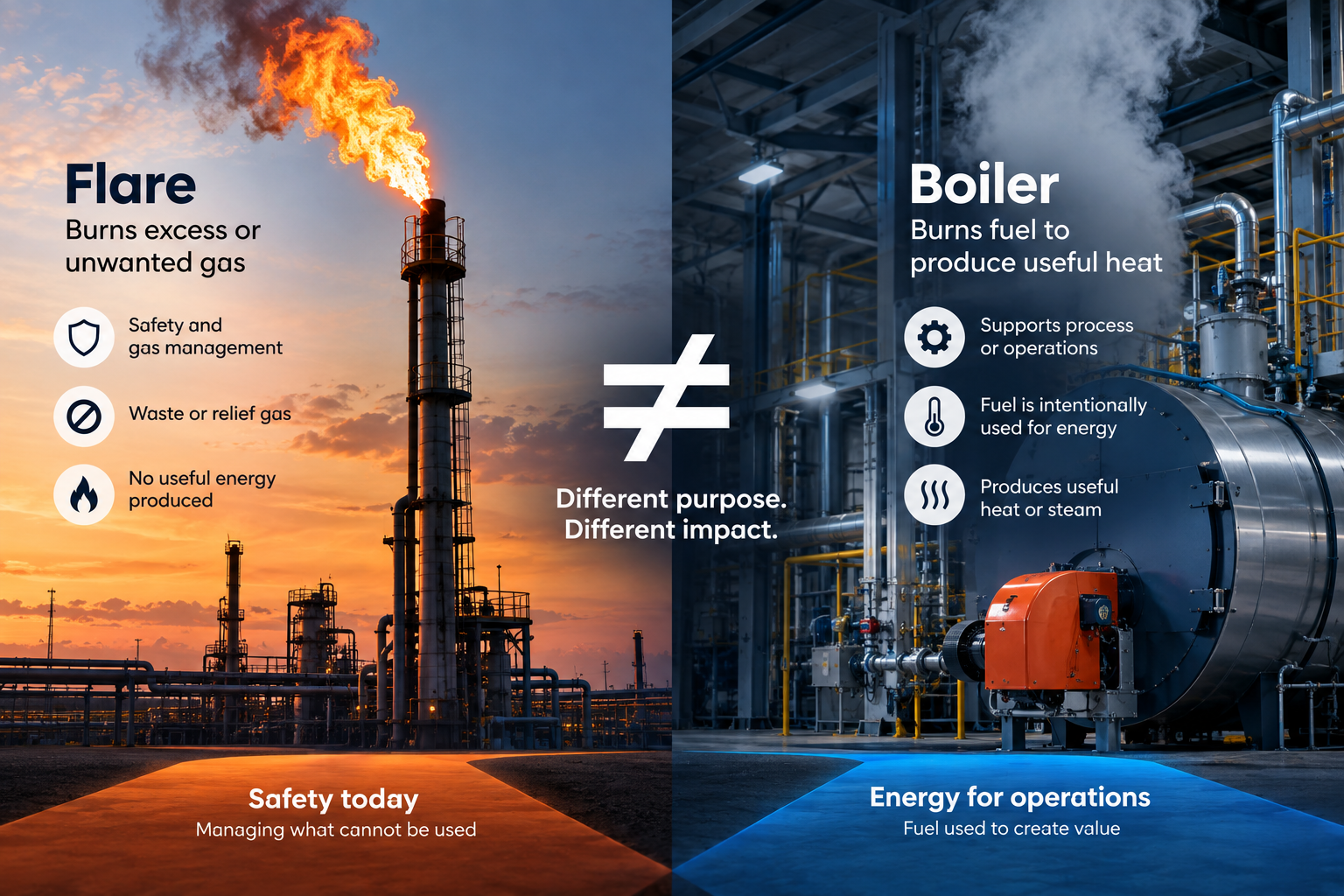
Oil & Gas: A Flare Is Not a Boiler
Flaring gets attention, but sold-fuel emissions can be much larger. Understand the flare vs boiler distinction and what it means for Oil & Gas reporting.